

Trader Profiles: Who Are You Really?
- RB Swingtrader
- Sep 16, 2025
- 3 min read

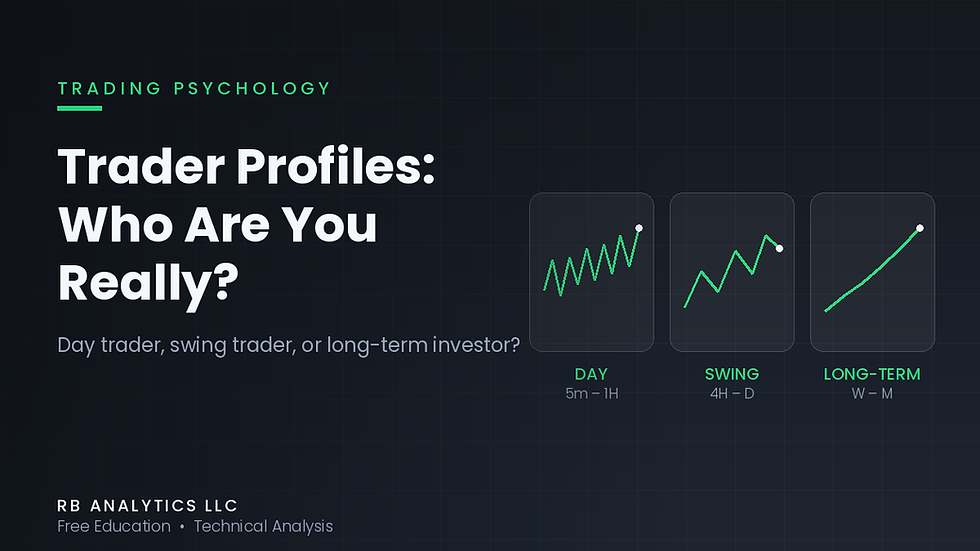
🧠 Trader Profiles: Who Are You?
Before diving into the fast-paced world of stock trading, there’s one essential question to ask yourself: Who are you as a trader?
In a landscape often glamorized by social media and lofty dreams of six- or seven-figure profits, it's easy to overlook the most critical step—defining your trading identity. This isn’t about choosing between stocks, options, or futures. It’s about understanding your personality, your goals, and how you naturally approach decision-making.
🎯 Why Your Trading Profile Matters
The stock market is a complex and often manipulative environment. It offers a wide array of instruments—stocks, ETFs, options, and futures—all designed to test your discipline and drain your resources if misused. Without a clear sense of self, you risk applying strategies that don’t align with your strengths, leading to frustration and losses.
To begin this journey of self-discovery, ask yourself:
What are my goals with trading?
Is this a long-term investment strategy or a primary income source?
Do I have a full-time job?
Am I a quick decision-maker?
Your answers will guide you toward the trading style that suits you best.
🔍 Exploring Trader Profiles
🕒 Day Trader
Day traders aim to profit from short-term market movements. Trades typically last from minutes to a few hours—a style known as scalping.
Traits of a successful day trader:
Sharp focus and rapid decision-making
Ability to monitor markets actively
Comfort with short-interval charts (e.g., 5-minute or lower)
Willingness to trade across global sessions (New York, Asia, London)
If you're trading futures, the 23-hour market offers flexibility across time zones. For options, your window is tighter—typically the New York session from 9:30 AM to 4:00 PM EST. Stocks offer extended hours in pre-market and post-market sessions.
💡 Capital Insight: Short-dated options are relatively inexpensive and can yield high percentage gains. Futures traders can access funding through prop firms at low cost. While capital is important, it shouldn’t define your trading identity—it’s simply an advantage for those who fit this profile.
⚠️ Caution: If you’re managing a full-time job, day trading may not be ideal. Markets move quickly, and trading during meetings or relying on alerts can lead to costly mistakes.
📆 Swing Trader
Swing trading suits a wide range of traders—from full-time professionals to those seeking side income or long-term wealth.
Traits of a swing trader:
A defined strategy and patience to wait for setups
Capital flexibility
Comfort with larger time frames (4-hour to daily charts)
Swing traders often use smaller time frames (15-minute or hourly) for precise entries aligning with the larger trend on the 4-hour or daily. Trades can last from a day to several weeks, depending on targets and stop-loss levels.
This style offers flexibility and time to think, making it ideal for those who follow trading communities or prefer a more deliberate pace.
📈 Long-Term Investor
This profile is a cornerstone of financial independence and wealth-building. Whether you're a day trader or swing trader, long-term investing should be part of your strategy.
Traits of a long-term investor:
Available capital
Patience to weather market volatility
Other income sources to support long-term positions
Long-term investors focus on daily, weekly, or monthly charts. The goal is to buy profitable companies at the right price—not chase hype. Dividends, covered calls, and cash-covered puts can enhance returns.
You don’t need to trade daily—just monitor for major changes, add positions when opportunities arise, and exit when targets are met.
💡 Final Thought
Trading isn’t just about charts and strategies—it’s about self-awareness. The sooner you understand your trading personality, the faster you’ll find consistency and confidence in your approach.
So… Who are you as a trader?


Comments